Description
Dual Scale for Aquaculture & Marine Monitoring
Ensure the perfect aquatic environment with precision salinity tracking. The RHS-40 ATC Handheld Salinity Refractometer is the ultimate tool for aquaculture professionals, fish farmers, and marine aquarists. Designed specifically to measure salt concentration in brine and saltwater, this optical refractometer provides instant, laboratory-grade readings to help you maintain optimal water quality for shrimp, fish, and coral health.
With built-in Automatic Temperature Compensation (ATC), you never have to worry about ambient temperature shifts skewing your data.
Key features
-
Automatic temperature compensation (ATC): Eliminates the need to manually correct readings when ambient temperatures shift between 10°C and 30°C — critical for outdoor pond-side monitoring in variable Australian conditions.
-
Dual-scale optics: Read directly in parts per thousand (ppt) from 0–40 ppt and specific gravity from 1.000–1.030 S.G. — no conversion tables required.
-
Pure aluminium construction: Corrosion-resistant body designed for the harsh, salt-laden environments common in coastal aquaculture and hatchery operations.
-
Micro-sample prism: Just 2–3 drops of water gives a clear, stable reading in under 30 seconds. Faster sampling means more monitoring points per inspection round.
-
No power source required: Operates entirely on ambient or natural light. No batteries to run flat during a long site visit or field trip.
-
Easy calibration: Single adjustment screw calibrates to distilled or RO water in seconds. Ship-ready pre-calibration included; recalibration takes under one minute.
Technical specifications
| Model | RHS-40 ATC |
| Salinity range | 0–40 ppt (0–4%) |
| Specific gravity range | 1.000–1.030 S.G. |
| Salinity accuracy | ±1 ppt |
| S.G. accuracy | ±0.001 |
| Scale divisions | 1 ppt / 0.001 S.G. |
| Temperature compensation | Automatic (ATC), 10–30°C |
| Body material | Pure aluminium (prism block and barrel) |
| Power source | None required — ambient light |
| Calibration method | Distilled or RO water, single screw adjustment |
| Suitable media | Seawater, saline solutions, brackish water |
| Standards | ISO / ASTM compatible calibration |
What’s in the Box?
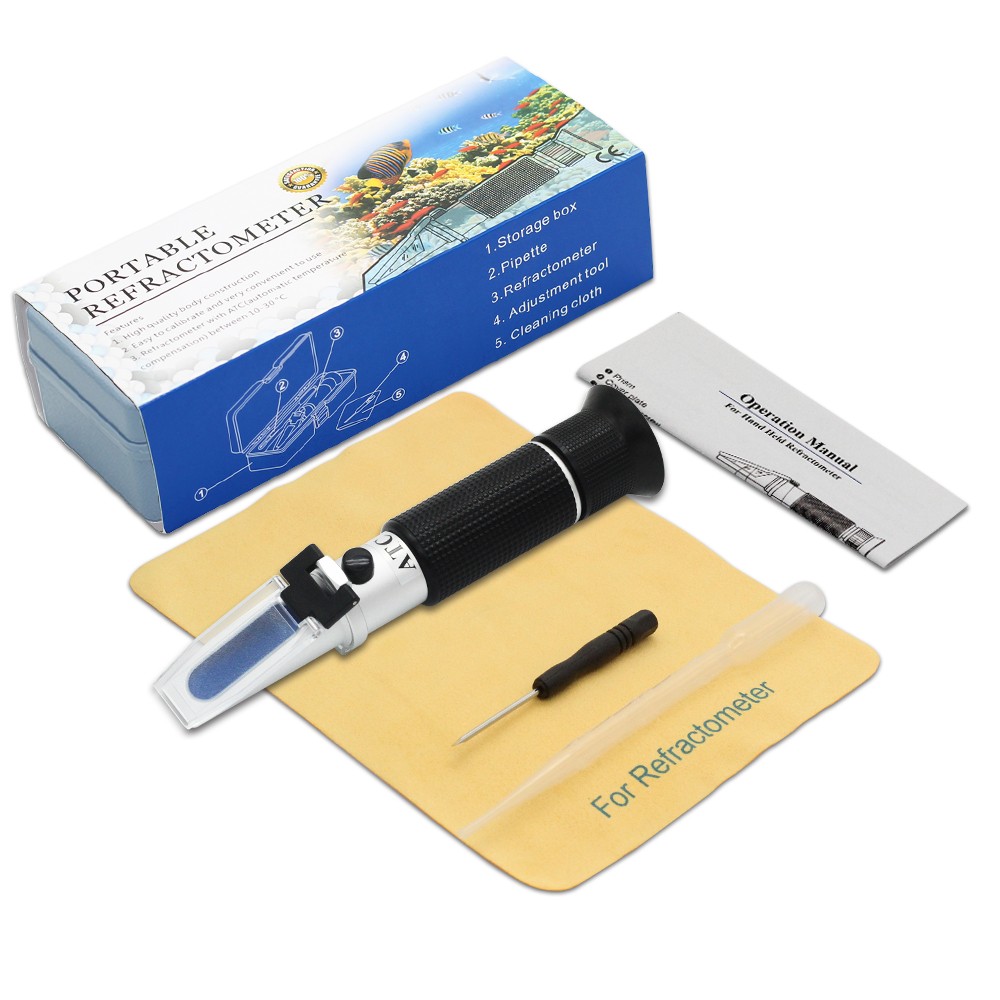
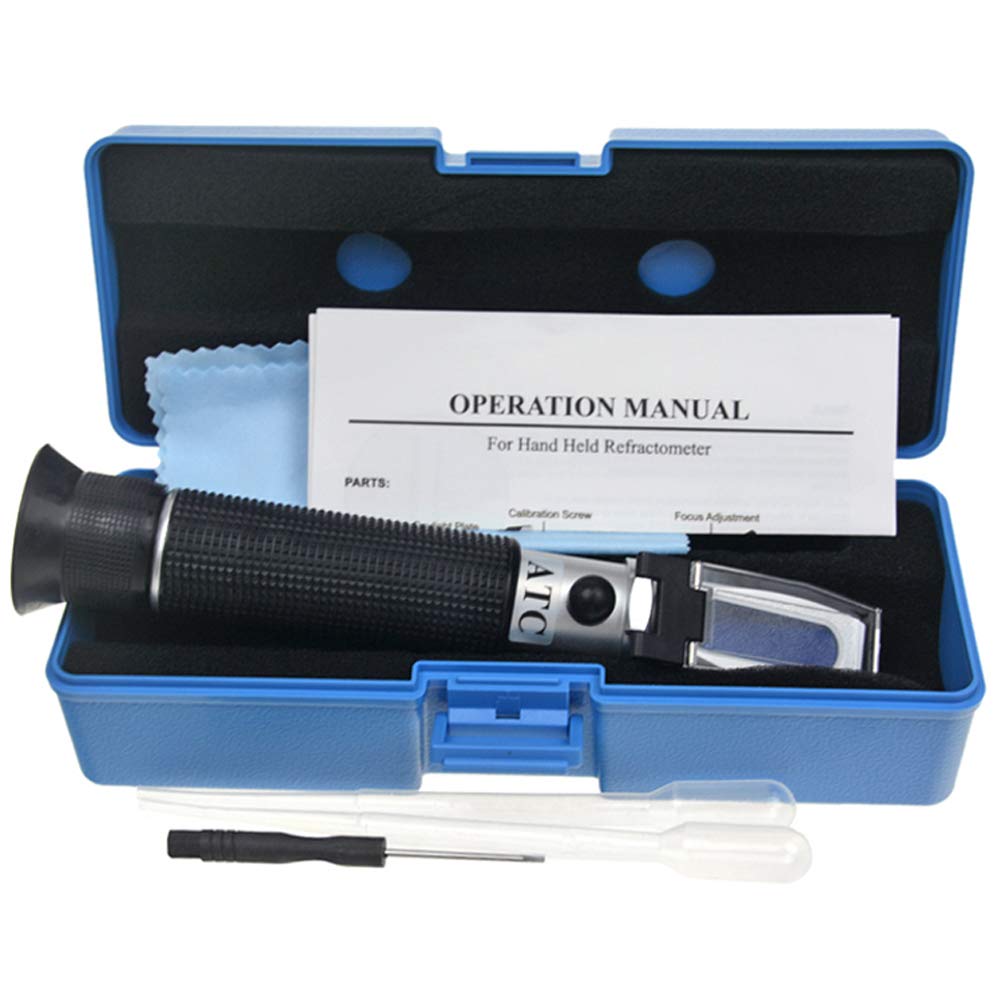
- 1 x Portable RHS-40 ATC Salinity Refractometer
- 1 x Mini Calibration Screwdriver
- 1 x Plastic Dropper Pipette
- 1 x Microfiber Cleaning Cloth
- 1 x Protective Hard Storage Case
- 1 x User Manual
Simple 3-Step Operation
Step 1: Calibration Check
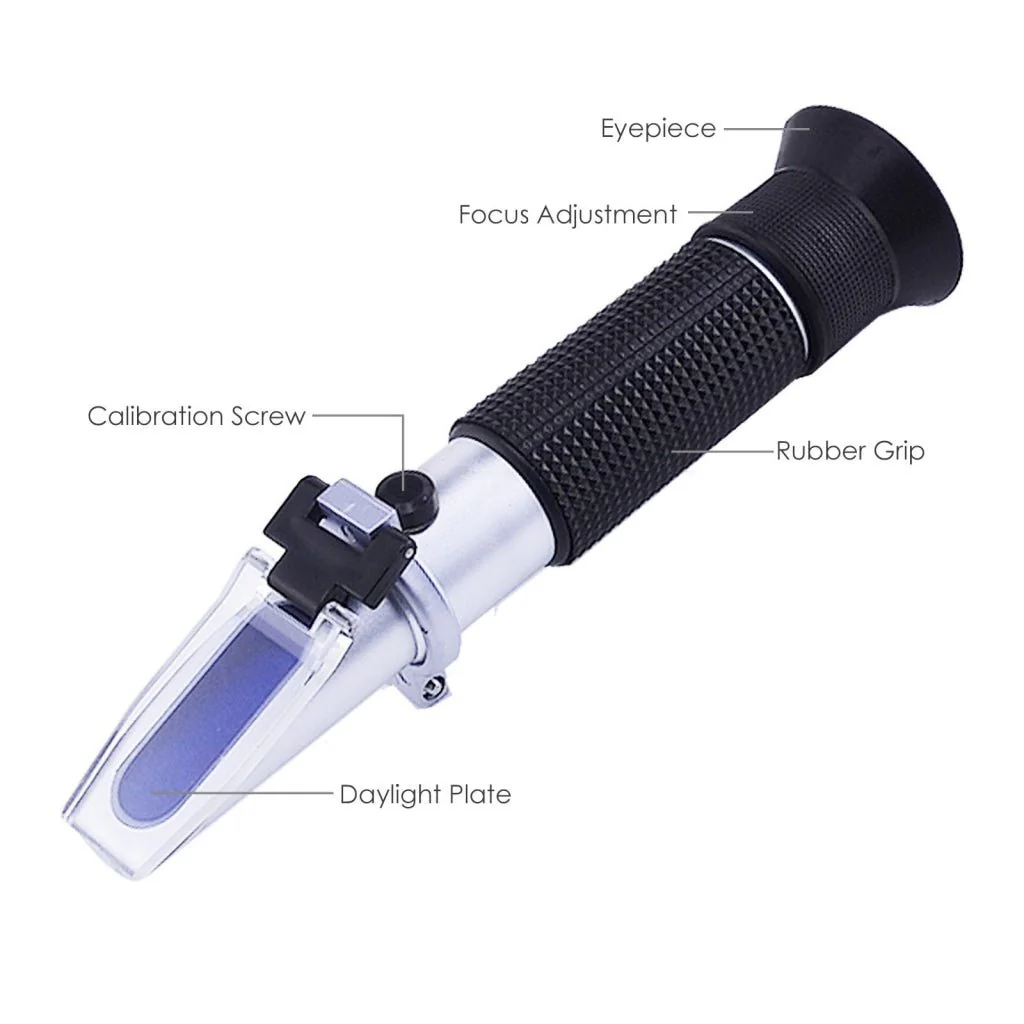
Place 2 drops of distilled water onto the main prism. Close the daylight plate, look through the eyepiece, and check if the boundary line meets the 0 ppt line. If not, gently turn the calibration screw until it aligns perfectly.
Step 2: Apply Sample
Wipe the prism dry with the soft cloth. Use the pipette to drop 2–3 drops of your aquaculture tank or pond water sample onto the prism. Close the plate gently so the water spreads evenly without air bubbles.
Step 3: Read the Results
Point the front of the refractometer toward a natural or artificial light source. Look through the eyepiece to view the distinct blue-and-white contrast line. Read your precise measurement on either the ppt or SG scale.
Salinity impact on species growth and survival
Research consistently shows that maintaining salinity within species-specific optimal windows delivers measurably better outcomes. The charts below illustrate how deviations affect growth and survival across key Australian aquaculture species.
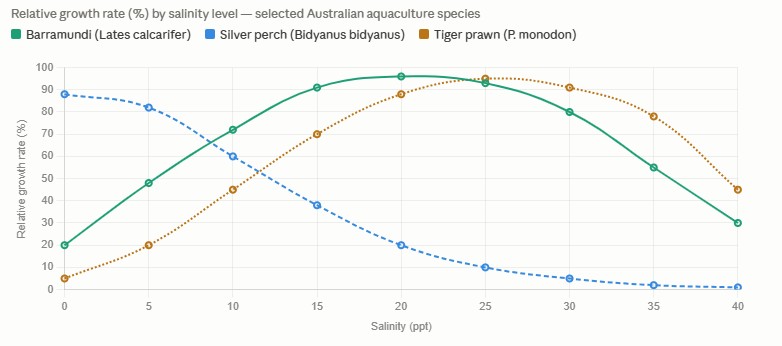
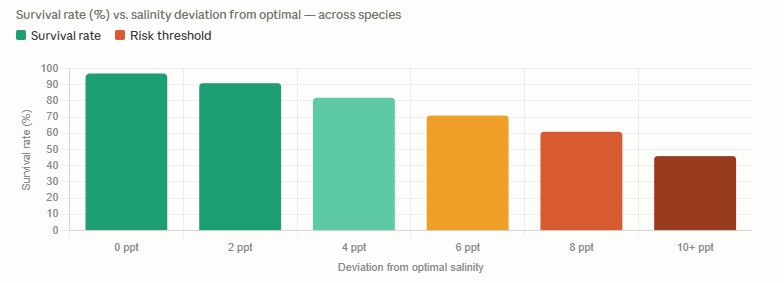
What this means for your operation: A difference of just 4–5 ppt from the optimal salinity range can reduce survival rates by 15% or more. With the RHS-40 ATC’s ±1 ppt accuracy, you have the precision needed to keep conditions within the window that protects your stock and maximises growth performance.
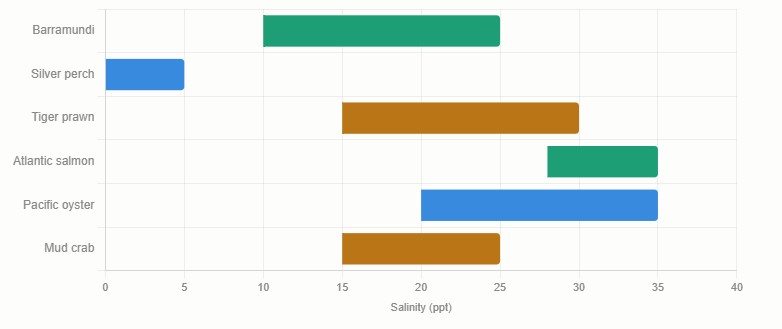
Optimal salinity ranges by species
Use this quick reference alongside your RHS-40 ATC readings when setting up or monitoring grow-out systems. All species listed are approved for aquaculture in Australia.
Aquaculture applications
- Marine finfish hatcheries– Monitor larval and juvenile tank salinity during critical early life stages when osmotic tolerance is lowest.
- Prawn & shrimp farms – Maintain optimal brackish salinity windows during post-larval and grow-out phases to maximise FCR and survival.
- Oyster & shellfish leases – Track estuarine salinity fluctuations during rainfall events and tidal cycles to anticipate stress responses.
- Euryhaline species – Barramundi, mullet, and bream aquaculture requires close salinity control during acclimation and grow-out transitions.
- Hatchery & Broodstock – Verify salinity during spawning induction and broodstock conditioning to meet species-specific reproductive triggers.
- Live transport – Confirm holding and transport water salinity matches source conditions to reduce transfer mortality.